
On "Real" Self

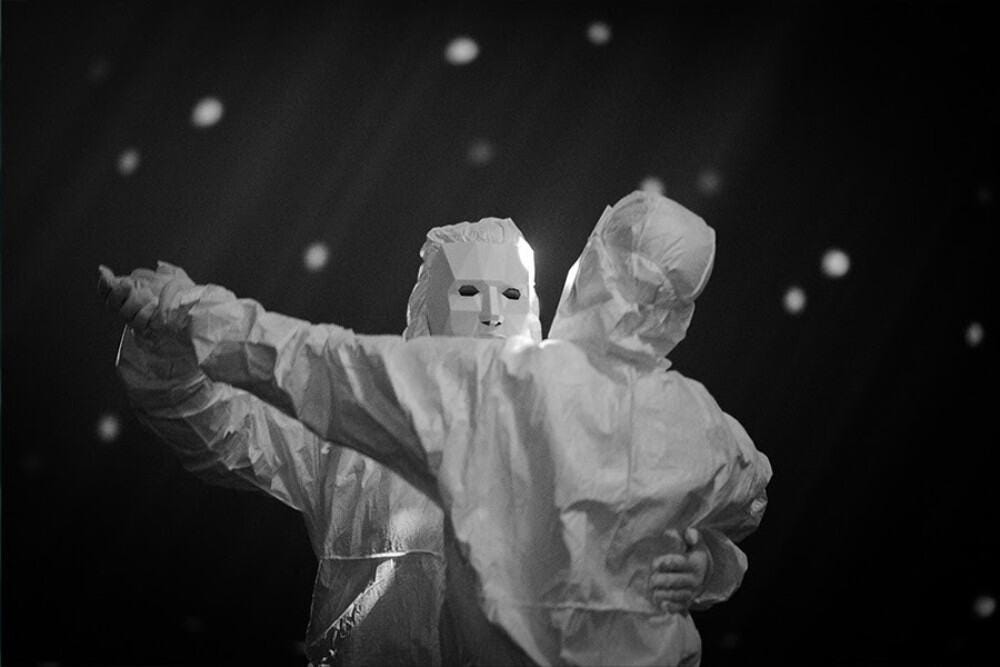
In my philosophical consultations, I presuppose neither that there is a constant metaphysical self, nor that there is a true psychological self.
That is, I do not want the client to find out whether he really is a substance, capable of thought or feelings, that can persist over large stretches of time — or whether that is an illusion, as e.g. some Buddhists claim. Because even if they are right, one can be a continuum of many metaphysical selves that happen to share some identifiable traits over large stretches of time — the traits the client tries to identify in consultations devoted to his self-knowledge.
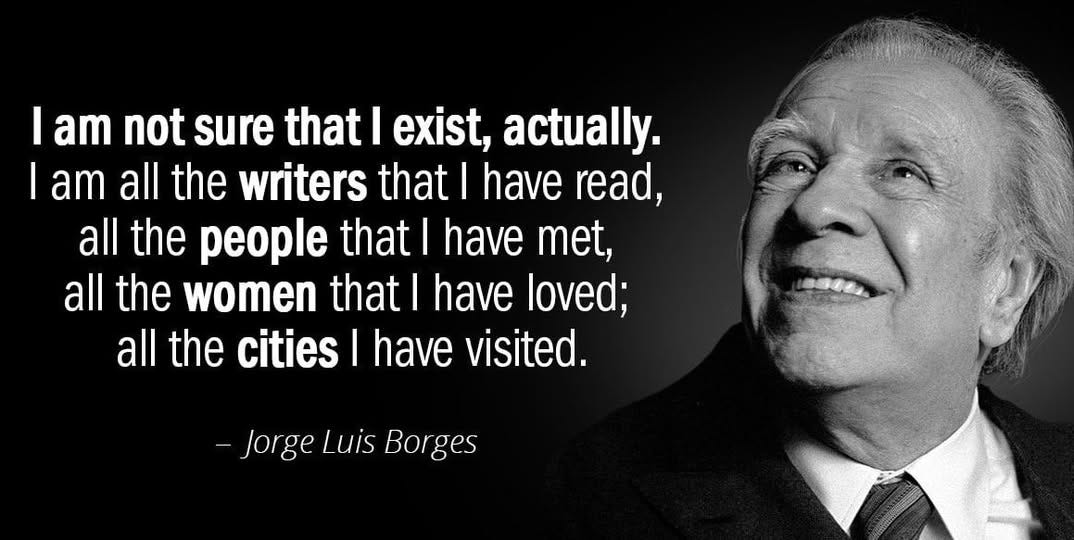
(Compare “Borges and I.”)
Also, I do not want the client to find some psychological core of his mind: a particular role, self-conception or way he feels about himself. I never claim that there is such a core, i.e., an ultimate or true mind-slice that dominates the other slices of one’s mind, both conscious and subconscious. (Although the adage “become who you are” by Lord Nietzsche in his “Honey Sacrifice” in Zarathustra IV, and in Gay Science §270, might be read by some as presupposing such a core.) Maybe there are only situational selves for different situations, some being malleable or created by one’s conscious or subconscious choices. Even so, one can explore these selves, and then try to change some and invent others. Compare Žižek.
(Btw, Yukio Mishima, a Nietzschean fiction writer, was well aware of this, according to this book, which I have started reading recently.)
Next, when I work with clients on their self-knowledge, I try to avoid all suggestions that self-knowledge is easy, or that all self-knowledge is equally reliable.
Consider: “You have to know who you are.”
— Nietzsche in The Twilight of Idols, “Skirmishes of an Untimely Man”, §7.
Yet, “You do not know — and cannot know — what is best about yourself.”
— Nietzsche in Beyond Good and Evil §249. See also The Gay Science §§ 335 and 355; Beyond Good and Evil §281; and Human, All Too Human, Preface, §7.
Maybe with that in mind, another Nietzschean fiction writer wrote to me recently, in correspondence.
In my opinion the only true knowledge of self is body-knowledge, the knowledge of how to move, how to lift weights, how to flex and create torque and power. Beyond that, any impression that we form of ourselves quickly turns to complacency. We must always suspect ourselves, always be suspicious, never think, ‘I have arrived, I am clever, I am wise, I am righteous.’ All of these things evaporate the moment we treat them as a steady state; each must be a continuous process. Wisdom is not something you possess, it is something you do, actively.
I agree that body-knowledge is quite reliable. It comes from physical experience, practice, muscle memory, and intuitive, often unconscious engagement with the body in movement. It involves understanding of how to control and optimize physical skills, balance, and coordination. Whether it’s lifting weights, controlling breath, singing, dancing, or climbing, these examples share a kinaesthetic awareness—a sense of how to move and engage with the physical world. Such self-knowledge is often more reliable than that of conscious introspection of one’s beliefs, desires, and past events. It is gained through much repetition and feedback. It is not affected by overthinking, biases, or emotional distortions. And its need for one’s survival during the eons of evolution underscores its reliability even further. Also, I tell my clients there are ways for them to get a clearer sense of their charm, and one key method is through kinaesthetic body-knowledge—becoming more aware of how they move, breath, and hold themselves, both when alone and when with others.
Now, other self-knowledge which I encourage my clients to do is similarly reliable, such as that they can obtain from good diagnostics of their health and sleep. The rest is less reliable, as it comes from their introspection or feedback by others, both of which may be quite biased. Even so, this less reliable self-knowledge holds value. It gives the clients probable or indicative clues that may not be precise but go beyond mere body-knowledge and can guide them if they approach the clues with openness to revision, esp. revision in response to their action. Also, what makes the clients really exceptional may not reveal itself through their quiet reflection but in trials and errors. It may even be beyond words, thought sensed or felt by him quite clearly. But thinking the client understands himself right away can be a misunderstanding that narrows his options.
Such premature self-knowledge can trap him in predefined roles or ideals and make him overlook some potential that can only be glimpsed by him through his twists, turns, and challenges. Nietzsche warns against this: against confusing ourselves with external roles, professions, or ideals chosen prematurely, pointing out how easily we can become imprisoned by something accidental (see his Gay Science §356; and Beyond Good and Evil §41).
Granted, single-minded clarity of one, even somewhat accidental, purpose can be powerful. Yet again, Nietzsche (Beyond Good and Evil §41 once more) recognizes the danger and anxiety of crystallizing into something too definite, lamenting the countless paths lost and the narrowing of horizons when one commits too early and too rigidly. Sometimes psychologists call it identity foreclosure. Compare Bronze Age Pervert, a Nietzschean Žižek.
(Source of the vid.)
So, treat esp. the conclusions from introspection and others’ feedback as hypotheses, not final truths. Test them. Esp. if several years have passed since your last assessment. Some tips will follow later.
—-
But if you insist or are interested, my own views on the self are close to those of Zero HP Lovecraft, who’s a Nietzschean, of course.
(Source, around min. 25.)
—-
Previous related post:
Undefined Desire / Defined Self Slavery

If you desire epic things, specify them. It’s rare. It makes you ungovernable.