
Undefined Desire / Defined Self Slavery

If you desire epic things, specify them. It’s rare. It makes you ungovernable.
Vagueness is the opium of the masses. To want “freedom,” “creativity,” or “success” is diluted ambition, a hazy narcotic. It keeps you docile because you don’t know what you really want while others keep telling you. So to want vaguely is slavery.
Have you seen Neon Genesis Evangelion? Many of you haven’t. Watch it. Not because of philosophy or something. It’s just very good. Anyway, the hero is Shinji Ikari, a boy who can pilot and master giant battle robots.

Yet, “Not knowing what brings him pleasure … leads Shinji to behave in an exceedingly compliant manner. Throughout the series, Shinji is shown to be a very quiet, submissive, docile person who does what others tell him to do.”
–- Nathan Visser and Adam Barkman, “How Do We Know Who We Are?”, in Neon Genesis Evangelion and Philosophy, 2022, p. 16.)
Most people float through life mistaking vague gestures for genuine goals. “I want to be free” translates to bleating at landlords on Twitter. “I want to create”, into doomscrolling.
This way you may outsource your desires to a crowd. “What if I name my hunger and find it unworthy or unpopular?” You let Instagram poets define purpose and LinkedIn hustlers dictate success.
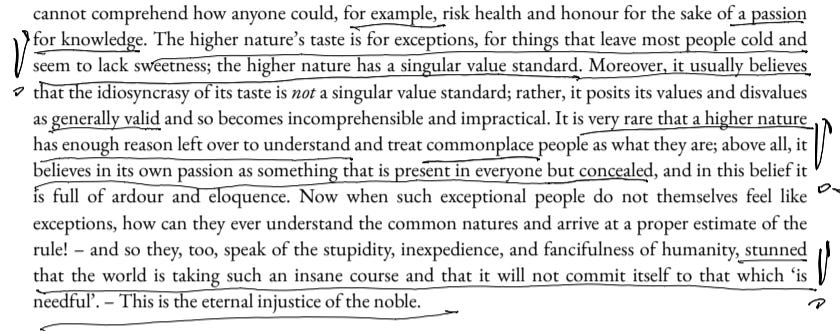
The antidote is specificity of real desire. Specificity is violence. Carve your desires with precision. Liquidating assets to buy a smuggling boat. Learning Blender to animate pornographic Dante fanfic. Earning enough to bribe a mayor. Imagine a man who believes his “true self” loves jazz. Instead of curating a vinyl collection, he learns saxophone to exclusively play Nickelback covers at funerals. If you must, yearn for things so niche they’re untranslatable, e.g., “I want to breed albino pythons to gift to North Korean diplomats.” Compare,


And Nietzsche’s Gay Science, Bk. I §3.
If you must, yearn as well for the common suspects: wo/men, money, respect, fame. But if your unique desire can’t be mocked by Redditors, it may well not be precise enough. Let others’ confusion fuel you. If your ambition doesn’t disturb them, it is maybe still too tame. If it survives scrutiny for three days or even months (more later on how to scrutinize), execute it. If it does not, burn it, and try another one. If none ever survives, and you are not just tired long-term, just be normal in everything. (And I add, even eccentrics should be normal in most ways.)
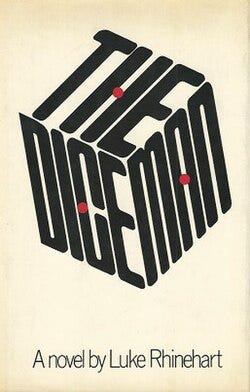
A problem is when nothing compels. When nothing seems inherently desirable. When “epicness” looks like a consensual hallucination, when it seems that we just agree to chase phantoms because the alternative is catatonia, that we cling to a splintered raft built on a shared delusion that our particular brand of drowning matters. Stavrogin in Dostoyevsky’s Devils writes, in his suicide letter: “what to apply my strength in – that’s what I’ve never seen and don’t see now.” All is “a delusion in an infinite series of delusions.” One possible hack amongst others is to exploit the machinery. If life is a vacuous puppet show, become the puppeteer. Want things not because they matter, but because wanting injects chaos into the anesthetic void. Master Mandarin to argue with CCP bots in their native tongue. Build a million-dollar business solely to fund a neo-dadaist collective. Protect your tribe not because “it’s right,” but because loyalty amuses you more than betrayal. This is close to the Dice Man, one of the main epic archetypes I will explore some other time.
Also remember that “just find your true goal or desire” may be a trap. Some people sell self-discovery as a static script to excavate. Believing that may turn you into putty, reshaped by every influencer’s shovel. The modern quest for authenticity is a hall of mirrors. Seekers wander, convinced their “true self, goals and desires” lie frozen in the glass, waiting to be found. Watch this:
Seekers sign a blank check for influencers and algorithms to define those for them. Seekers become marionettes, their strings pulled by charismatic charlatans who claims to see their “essence.” A therapist’s diagnosis becomes their origin story. A personality test morphs into a life sentence: Enneagram 4, INFP, Highly Sensitive Person, ADHD, Autistic. Don’t fall for that. Don’t “just find yourself”. Shape yourself through hyper-specific acts, grotesque ones if necessary. Van Gogh didn’t “just find” his artistic voice and instead he pushed it into existence through relentless experimentation (600 paintings in 9 years).
—-
Follow-up post:
On "Real" Self

In my philosophical consultations, I presuppose neither that there is a constant metaphysical self, nor that there is a true psychological self.
Good post!
Why is the goal/desire (values) to be made specific but the personal identity (self) to be held loosely?
Wouldn't someone eventually identify with their goals, and call it the "true self"?
"I am the kind of person who wants epic things".
I suppose this is an identification with the mask that Zizek mentioned, but it's the opposite of "imprisoning yourself by your persona" that BAP mentioned.
I can certainly see how both might be appreciated: holding an identity loosely and being very specific about goals. It's a balance tho. Because what fuels the desire if not the ego?